I’m Every Woman: An Ode to Sisterhood
Please note: This story contains mentions of sexual violence.
On June 29, 2026, I finished reading Gisèle Pelicot's book, "A Hymn to Life," a powerful memoir in which the author recounts her experience as a victim of drug-facilitated sexual assault and abuse, as well as her subsequent fight for justice.
A light flickered in my heart as I traveled by plane from Pereira to Bogotá, holding hands with my current partner, and finished the last page of the book. It was then that I understood that the time had come to tell my story. That although I had begun writing this almost two years earlier, I was now ready to finish it and share it with my community.
My relationship with my body and my identity as a woman wasn't ideal. For many years, even from childhood, I struggled with the expectations society and our families typically have about how we should look and act. As I grew up and began to inhabit new physical spaces, I felt that something about me didn't quite fit, that I didn't see myself reflected in the women around me, and that I wasn't even remotely attractive to the average man. Maybe I should dress differently, maybe I should take up less space, maybe I should feel less, maybe I should please others more.
In 2021, I met a young man whom I dated for a couple of months. We engaged in relationship dynamics that, to me, were "normal" in a relationship between a man and a woman. So normal that they led me to normalize the repeated sexual abuse he was committing against me. The person who was supposed to love me, protect me, and prioritize me instead abused me, my fear, and my powerlessness.
After ending the relationship with him for reasons unrelated to the abuse, I spent many months crying in the shower, suffering from insomnia, and feeling uncomfortable in my own skin without understanding why. My mind had shut down to protect me, and I spent days trying to understand why I felt this way, until one day I received the answers I needed while writing in my journal: the man in whom I had confided and trusted had abused me on several occasions, and that's why I found myself in a hazy cloud of reflections, ideas, and questions.
Furthermore, I thought that because I work with so many women, many of them feminists, activists, and advocates for gender equality, and because I support survivors in different areas of my life, I would recognize these behaviors and stop them in time. I doubted whether I was a victim and instead blamed myself for what had happened. I felt ashamed and wanted to hide from everyone: my family, my friends, my colleagues, and even my best friend, who has been a fundamental part of my life for the last 15 years, and whose way of loving me is to take care of me.
But I did not recognize the abuse, not during the violence I endured, nor in the months that followed when my mind kept the memory blocked, and certainly not when I decided to open up and tell my family what had happened to me. However, when I decided to be vulnerable and tell my story to my female friends, my closest support network, for the first time in months, I felt I could feel my heart if I placed my hand on my chest. When I nervously told my story, I realized that several of my friends had gone through the same thing, and that they were only just realizing that they had been victims of sexual abuse through my story.
The fact that my friends and I had all been silent survivors of sexual violence is no coincidence. The systems of patriarchy around us would rather we stay quiet than confront the realities of what women experience. Naming what has harmed us, questioning the roles we've been expected to play, and envisioning something different all challenge a system that benefits from our silence. Because once we speak, it becomes harder to ignore the changes that justice requires.
Two or three years later, I fainted in the middle of the night while trying to go to the bathroom, and once I regained consciousness, I vomited uncontrollably. From that moment on, I began to experience unbearable pelvic pain and went to the gynecologist, who diagnosed me with endometriosis, an incurable disease that healthcare systems often don't address adequately and that affects 10% of women and girls of reproductive age worldwide.
While my endometriosis diagnosis had nothing to do with the sexual abuse that I endured, it contributed to the deterioration of my relationship with my body. Being a victim of sexual abuse and simultaneously living with a debilitating illness made me question my worth as a woman. If endometriosis reduces my chances of getting pregnant, am I enough of a woman? If I was a victim of abuse, do I deserve to fall in love again? If I speak of a deep pain in my heart, soul, and body that accompanies me daily, am I exaggerating?
I went to therapy and began to delve deeper into my physical sensations, which were giving me some answers—about the guilt, about the uncertainty, about the pain, and about the hopelessness. Locked in the shower, I cried as the water fell over my body, hugging myself and repeating aloud, "I choose you, I am enough, I am with you." Along the path of self-embrace and healing, new questions arose, but I could find the answers to them all with these same tools. Speaking with other women who have been survivors of sexual abuse reminded me that I am not alone, that nothing that happened was my fault, and that I should certainly not feel ashamed for having lived through it. My sisters are also resilient, and together we are celestial stars who guide each other and show us the way when we’re lost.
My sisterhood at RISE supported me, and my sisterhood with my friends saved me. It healed my soul.
I feel that we underestimate the power of sisterhood, or we know its power but don't fully recognize it unless it transforms us through a personal experience, and this is perhaps my biggest takeaway: We women save ourselves, we are a home for ourselves, and we embrace, support, and uplift each other with love, pride, and faith, regardless of our country of origin, our faith practice, our racial identity, or even our principles.
My idea of being a woman continues to change as my understanding of my sexuality is restored, my understanding of my body strengthens, and even as my understanding of how I express my personality takes shape. I've done powerful and transformative things like shaving my entire head months after the sexual assault to strip myself bare and reclaim the rawest and most honest parts of myself; I've clung to my network of female support and permitted myself to make mistakes.
Today I recognize myself as a free woman who stands firm and serves as a home to others, as my grandmother Susan did in the 80s. I am an embrace, warm and comforting like the food my friends Valentina, Juliana, and Stephanía prepare for me when they know I'm sad. I am the love that transforms into care, like the care my aunt Elizabeth gave me when she bathed me and dressed me in my school uniform each morning when I was a child. I am the adventures and dreams I want to achieve, like those I share with my best friend María, who is now everything she ever dreamed of being as a child. I am a haven for other women, like my coworker and sister Asma Nizami, whom I called countless times to organize my thoughts and bring peace to my feelings. And I am also the bravery and courage of Gisèle Pelicot, who planted a seed in me with her book—a seed that has now grown into a large and beautiful plant, finally able to see the sunlight and reveal itself to others through this story.
Español:
El 29 de junio de 2026 terminé de leer el libro de Gisèle Pelicot: “Un himno a la vida”. Habla de memorias impactantes en las que la autora relata su experiencia como víctima de agresión sexual y abuso facilitado por drogas, así como su posterior lucha por la justicia.
Una luz se encendió en mi corazón mientras viajaba en avión de Pereira a Bogotá, tomada de la mano de mi actual novio, justo al terminar la última página del libro. Fue entonces cuando comprendí que había llegado el momento de contar mi historia; que aunque había empezado a escribirla casi dos años atrás, ahora estaba lista para terminarla y compartirla con mi comunidad.
Mi relación con mi cuerpo y mi identidad como mujer no era la ideal. Durante muchos años, incluso desde mi infancia, luché contra las expectativas que la sociedad y nuestra familia suelen tener sobre cómo debemos vernos y comportarnos. A medida que crecía y comenzaba a habitar nuevos espacios físicos, sentía que algo en mí no encajaba del todo, no me veía reflejada en las mujeres que me rodeaban y no resultaba ni remotamente atractiva para el hombre promedio. Quizás debía vestirme de otra manera, ocupar menos espacio, sentir menos o complacer más a los demás.
En el año 2021 conocí a un hombre con quien salí durante un par de meses y nos involucramos en dinámicas que para mí, eran “normales” en una relación entre un hombre y una mujer. Tan normales que me llevaron a normalizar el abuso sexual reiterado que él ejercía sobre mí. La persona que debía quererme, protegerme y priorizarme, en cambio, se aprovechó de mí, de mi miedo y de mi impotencia.
Tras terminar la relación por motivos ajenos al abuso, pasé meses llorando en la ducha, sufriendo insomnio y sintiéndome incómoda en mi propia piel sin entender por qué. Mi mente se había bloqueado para protegerme y pasé mucho tiempo tratando de comprender por qué me sentía así, hasta que un día encontré las respuestas que necesitaba mientras escribía en mi diario: el hombre en quien había confiado plenamente había abusado de mí en varias ocasiones, y por eso me encontraba inmersa en una bruma de reflexiones, ideas e interrogantes. Además, pensaba que precisamente porque trabajaba rodeada de mujeres, muchas de ellas feministas, activistas y defensoras de la igualdad de género, y porque acompañaba a supervivientes en distintos ámbitos de mi vida, sabría reconocer estas conductas cuando aparecieran en mi propia vida y las frenaría a tiempo. Dudaba de si era una víctima y, en cambio, me culpaba por lo sucedido. Sentía vergüenza y quería esconderme de todos: de mi familia, mis amigos, e incluso de mi mejor amiga, quien ha sido una parte fundamental de mi vida durante los últimos 15 años y cuya forma de quererme es cuidarme.
Pero no reconocí el abuso: ni durante la violencia que sufrí, ni en los meses posteriores en que mi mente mantuvo el recuerdo bloqueado, y mucho menos cuando decidí abrirme y contarle a mi familia lo que me había sucedido. Sin embargo, cuando decidí mostrarme vulnerable y contar mi historia a mis amigas, mi red de apoyo más cercana, por primera vez en meses sentí que podía percibir los latidos de mi corazón al colocar mi mano sobre mi pecho. Al relatar mi historia con nerviosismo, me di cuenta de que varias de mis amigas habían pasado por lo mismo y que, gracias a mi relato, apenas entonces comprendían que habían sido víctimas de abuso sexual.
Que mis amigas y yo fuéramos supervivientes silenciosas de violencia sexual no es casualidad. Los sistemas patriarcales que nos rodean prefieren que guardemos silencio antes que afrontar la realidad de lo que viven las mujeres. Poner nombre a aquello que nos ha hecho daño, cuestionar los roles que se espera que desempeñemos, e imaginar algo distinto son acciones que desafían a un sistema que se beneficia de nuestro silencio. Porque, una vez que alzamos la voz, resulta más difícil ignorar los cambios que exige la justicia.
Dos o tres años después, me desmayé en plena noche mientras intentaba ir al baño y, al recuperar el conocimiento, vomité de forma incontrolable. A partir de ese momento, comencé a sufrir un dolor pélvico insoportable y acudí al ginecólogo, quien me diagnosticó endometriosis: una enfermedad incurable que los sistemas de salud a menudo no abordan adecuadamente y que afecta al 10 % de las mujeres y niñas en edad reproductiva en todo el mundo.
Aunque mi diagnóstico de endometriosis no guardaba relación con el abuso sexual que sufrí, contribuyó al deterioro de la relación con mi propio cuerpo. Ser víctima de abuso sexual y, al mismo tiempo, convivir con una enfermedad incapacitante me llevó a cuestionar mi valor como mujer. Si la endometriosis reduce mis probabilidades de quedarme embarazada, ¿soy “suficientemente mujer”? Si fui víctima de abuso, ¿merezco volver a enamorarme? Si hablo de un dolor profundo en el corazón, el alma y el cuerpo que me acompaña a diario, ¿estoy exagerando?
Acudí a terapia y comencé a profundizar en mis sensaciones físicas, las cuales me ofrecían algunas respuestas: sobre la culpa, la incertidumbre, el dolor y la desesperanza. Encerrada en la ducha, lloraba mientras el agua caía sobre mi cuerpo; me abrazaba a mí misma y repetía en voz alta: “Te elijo a ti, soy suficiente, estoy contigo”. En este camino de autocompasión y sanación surgieron nuevas preguntas, pero pude hallar respuestas para todas ellas gracias a estas mismas herramientas. Hablar con otras mujeres supervivientes de abuso sexual me recordó que no estoy sola, que nada de lo ocurrido fue culpa mía y que, sin duda, no debo sentir vergüenza por haberlo vivido. Mis hermanas también son resilientes y, juntas, somos estrellas celestiales que nos guiamos mutuamente y nos mostramos el camino cuando estamos perdidas.
La sororidad que encontré en RISE me apoyó, y la sororidad con mis amigas me salvó. Sanó mi alma.
Siento que subestimamos el poder de la sororidad, o bien conocemos su fuerza pero no la reconocemos plenamente hasta que nos transforma a través de una experiencia personal; y esta es, quizás, mi mayor enseñanza: nosotras, las mujeres, nos salvamos a nosotras mismas, somos nuestro propio hogar y nos abrazamos, apoyamos y elevamos mutuamente con amor, orgullo y fe, sin importar nuestro país de origen, nuestras creencias religiosas, nuestra identidad racial o incluso nuestros principios.
Mi concepto de lo que significa ser mujer sigue evolucionando a medida que recupero la comprensión de mi sexualidad, fortalezco la conexión con mi cuerpo e incluso voy definiendo cómo expreso mi personalidad. He realizado actos poderosos y transformadores, como raparme la cabeza por completo meses después de la agresión sexual, para despojarme de todo y recuperar las facetas más auténticas y crudas de mi ser; me he aferrado a mi red de apoyo femenino y me he permitido cometer errores.
Hoy me reconozco como una mujer libre que se mantiene firme y sirve de hogar para otras, tal como lo hizo mi abuela Susana en los años 80. Soy un abrazo, cálido y reconfortante como la comida que mis amigas Valentina, Juliana y Stephanía me preparan cuando saben que estoy triste. Soy el amor que se transforma en cuidado, como aquel que me brindaba mi tía Elizabeth cuando me bañaba y me vestía con el uniforme escolar cada mañana durante mi infancia. Soy las aventuras y los sueños que deseo alcanzar, como los que comparto con mi mejor amiga María, quien hoy es todo lo que soñó ser cuando era niña. Soy un refugio para otras mujeres, como mi compañera y hermana Asma Nizami, a quien llamé innumerables veces para ordenar mis pensamientos y encontrar paz emocional. Y soy también la valentía y el coraje de Gisèle Pelicot, quien sembró una semilla en mí a través de su libro; una semilla que ha crecido hasta convertirse en una planta grande y hermosa, capaz por fin de ver la luz del sol y de revelarse ante los demás mediante esta historia.
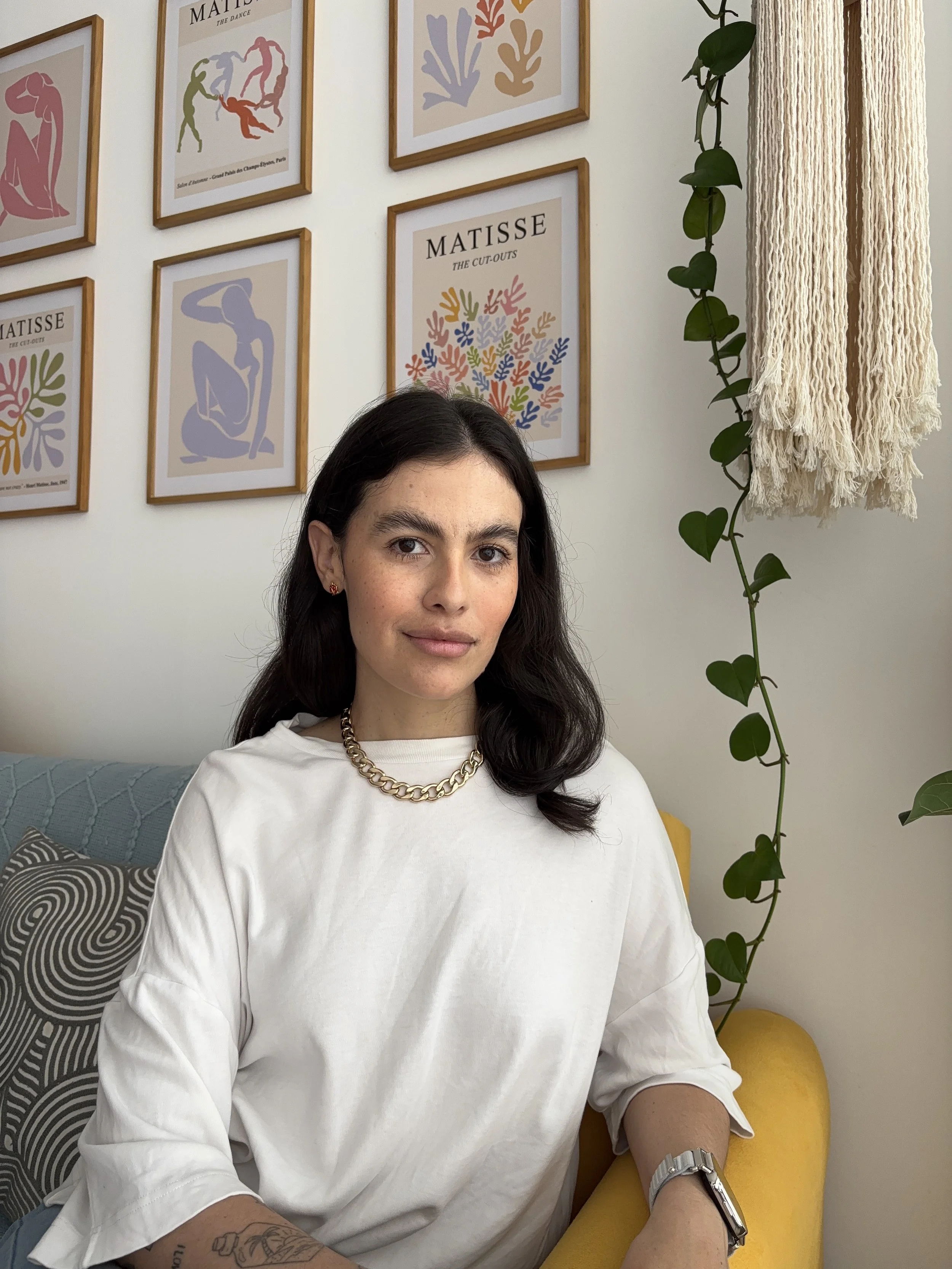
Camila Guzmán is a feminist, social communicator, model, and content creator from Pereira, Colombia, with a deep passion for art, creativity, and the power of expression. She believes in art and storytelling as tools for transformation.
Camila holds a bachelor's degree in Social Communications and Journalism from the Catholic University of Pereira. Over the years, she has worked in communications, community management, education, and the arts, including as a Communications Assistant at the Museum of Art of Pereira. She has also lived in New York as an au pair for two American families and has volunteered with nonprofit organizations, feminist initiatives, and animal shelters.
For the past five years, Camila has worked as a model, and for the last four, she has created content for social media, a space she has transformed into a platform to communicate what she feels and what she believes in. Her work explores feminism, womanhood, relationships, sexuality, self-discovery, and the contradictions of being human, often bringing attention to the conversations we avoid because they are uncomfortable, vulnerable, or difficult to put into words.
Through her work, Camila hopes to create content that leaves a mark: content that makes people pause, question what they have been taught, and see themselves and others with greater empathy. Her purpose is to create spaces where women feel empowered, where uncomfortable questions are welcomed, and where speaking about the things we are usually expected to keep quiet can become a way of understanding ourselves and transforming the world around us.