
Era of Peace: A Reflection on Syria's Liberation
“Did you hear about what’s going on in Aleppo?”
“Yes, I don’t think I really understand it.”
“Yeah, me either.”
On the 1st of December, 2024, I was out with my cousin when we had just started hearing about the resistance in Aleppo. We’d gathered our political information the same way we always had, via conversations with people who seemed to know more about the topic somehow and the Facebook groups where people either voiced their concerns or poked fun at the fact that nobody really understood what was going on at the core of the matter. People were saying that Aleppo was now “free”; we couldn’t quite comprehend that. There had been so many attempts at our liberation that we came to see any further ventures as distant and indiscernible. We often thought, “oh, they’re at it again,” failing to recognize who exactly they were and what precisely it was they were at again. Our minds had lost the ability to recognize and assess these events individually. We were no longer able to critically evaluate these things and see the immediate effect they had on our lives.
Regardless of our naive indifference at the time, we soon came to see the significance of the events we’d shrugged off and ignored. The 8th of December, 2024, marked the liberation of a nation and the fall of a dictatorship.
It was quite difficult to process; even now it sometimes remains so. We never really imagined the fall of the Assad Regime. The dictatorship had lasted over fifty years, and we had lost so much. We had gone through war. We had lost loved ones. We were stripped of our freedom of speech and our liberty. We had lived in this constant fear and grown so accustomed to the persistent dehumanization that the possibility of liberation ceased to exist. Our limited capacities were a byproduct of living under the dictatorship.
There is a difference between a poor country and a badly governed one; there is also a difference between a badly governed country and a dictatorship. The immense poverty and degradation of quality of life suffered in Syria was never due to the lack of resources in the country nor simply bad governance; rather, it was due to the system of governance. I must clarify this to those who have yet to recognize the nature of the Assad Regime and who never had to live under its tyranny.
The classification of the regime as a dictatorship should give a better picture of how they ruled the country. However, it does not begin to capture the horrors that the Syrian people endured. I feel the need to elaborate; there was an overarching threat of violence everywhere. There were military checkpoints on every other street. There were pictures and statues of our rulers everywhere. It was the norm for people to simply disappear.
No one would speak about it in public, but you could hear it in the whispers. Saying the wrong word in front of the wrong person at the wrong time could mark the end of your days. We’d often heard of what happened to the people that disappeared.
They were taken to underground dungeons where they were tortured so much, they would beg to be taken out of this cruel world. You learned to oblige. You learned to comply in order to survive. You learned to be quiet. You acquired the skill of learning who to trust. It was commonplace for you to ask yourself who you could speak to freely without worrying your mother. You learned which parts of town were safe and which weren’t. You would hear of the streets where you must keep your lips sealed and stay alert and walk as briskly as possible.
We all experienced some form of dehumanization or other. Some forms that I just now realize we failed to notice. The Assad Regime had strategic ways of degrading our quality of life. They instilled laws that limited even the amount of bread and gas you could buy. They had a system of distributing water and electricity so that every area had a set number of hours for the day. You had to cater your life around that schedule. They kept you in that little Kafkaesque circle. Miniscule daily tasks would take forever. The aim of all of this, of course, was to keep individuals in line. How is a man to rebel if he hasn’t even his daily bread?
The horror beyond all horrors was the fact that we had lost hope. This phrase is thrown around so much that I find it tends to lose its true meaning. The desperation of a nation means that the citizens have internally given up. The dictatorship had managed to remove the possibility of freedom from our brains. In the novel 1984, the government is actively brainwashing its people. One of the characters who works for the government explains that one way they were doing this was eliminating words from the vocabulary. Important words, like “freedom.” How is a man to seek freedom if he is unaware of its definition? Though our government had not gone so far as omitting words from our vocabularies, they had succeeded in removing the possibility of freedom from our minds. The disappearances, the torture, and the various dehumanization methods—all of these were devices of control. These were the Assad Regime’s methods of disheartening their subjects and, thus, keeping them in line.
The war is over now. We must come to terms with the different reality that we now live in. We must restore hope and initiate internal change. We must take a look at the past and understand it. We must understand that what was done to us, our country, our people, was anything but the norm. It is not normal to live in a constant state of fear, it is not normal for an entire people to worry over their basic needs, it is not normal to not have liberty.
Syria is still suffering, and it is in a delicate transitional phase. The fall of the Assad Regime was only the first step towards a brighter future. Their violence still echoes in our deserted streets and toppled homes. It will take ages to dismantle the damage of our past rulers. But first, we must fully come to terms with our past, so that we can move forward into a new era and begin to heal.
As I was out with my family celebrating a few days after our liberation, I saw a young man not far from us pull a bill out of his pocket and burn it on the ground. The bill had Bashar Al Assad’s face on it. As I watched the bill burn and evaporate into the air, I reflected upon this new era we were entering. There was this immense feeling of community and belonging among the people. The joy I saw on people’s faces during that time was unlike any that I’d ever seen. The joy that I felt was unlike anything I’d ever experienced. I felt at home and at peace. At the time I hadn’t yet put a name to the emotions inside of me. I hadn’t yet done the logic and understood the reasoning behind these emotions, but I still experienced joy unlike any other. And I doubt I’ll ever experience anything like it again. I now realize that the 8th of December was the day we were given back our dignity and freedom and, most importantly, our right to be human.
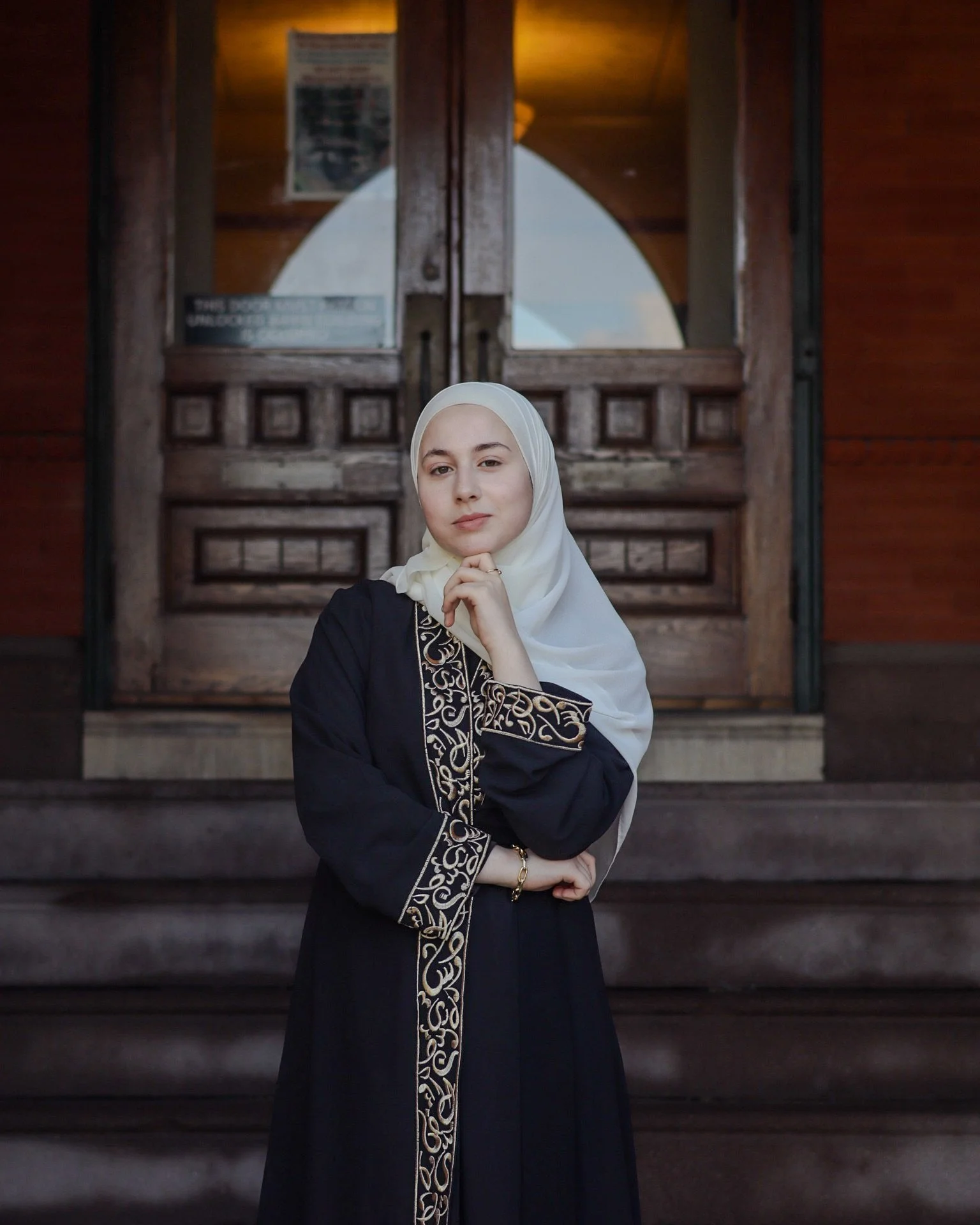
Noura Alhomsi is a Syrian American neuroscience student at Hamline University. She is a passionate scientist and storyteller. Writing gives her an opportunity to tie together her two passions: neuroscience and storytelling. In her writing, Noura strives to spread the stories of voiceless individuals and explores themes of dehumanization and human nature.