Voting Is How We Use Our Hands
During Operation Metro Surge, I found myself thinking a lot about what it means to be an American.
I watched families in my community become afraid to do ordinary things because they were racially profiled and made to prove their American citizenship.
Parents were afraid to take their children to school. People were afraid to go to work or attend immigration appointments. Families were making plans for who would care for their children if they did not come home. Citizens carried passports and identification because the color of their skin, their hijab, their accent, or the language they spoke made them feel like they had to prove they belonged.
There were mornings when I would drive down the road and see abandoned cars and wonder who had been taken from them.
That stays with me.
But so does what happened next.
Neighbors delivered groceries. People gave rides. Attorneys answered questions. Community members checked on elders and families who were afraid to leave their homes. Minnesotans organized, testified, protested, donated, advocated, and cared for one another.
In a moment when so many people felt powerless, we used whatever power we had.
And that is what I keep thinking about as we approach another election.
Citizenship Is More Than What Is Written on a Passport
Operation Metro Surge forced many of us to think deeply about belonging.
Who gets to be American without question? Who is automatically assumed to belong? And who feels they have to prove it?
I know what it feels like for people who look like me to have our belonging questioned. But I also know who I am.
I am Somali. I am Muslim. I am Black. I am an immigrant. I am a woman.
AND I am American.
I do not have to erase one part of myself to claim another.
And for me, being American is not only about what is written on my passport. It also means participating in the country I call home.
Citizenship comes with rights, but I believe it also comes with responsibility: to pay attention, to learn, to ask questions, to care about what happens to our neighbors even when it does not happen directly to us, to participate in our communities, to hold our institutions accountable, and to vote.
What Can I Change With My Hands?
There is a hadith I return to often. The Prophet Muhammad ﷺ taught that when we see something wrong, we should change it with our hands if we are able. If we cannot do that, then we should change it with our tongues. And if we cannot do that, then we should reject it in our hearts.
I have been thinking about what those words mean in the context of civic life. What can we change with our hands?
Our hands can deliver food to a neighbor. They can hold the hand of someone who is afraid. They can knock on a door or write a letter to an elected official. They can raise a sign, fill out a public comment form, help someone register to vote, or testify before our government.
And our hands can fill out a ballot.
Our faith does not teach us to see what is happening around us and become indifferent. It teaches responsibility. For me, civic participation is one way I live out that responsibility.
Your Vote Is About More Than One Candidate
I often hear people say, “My vote doesn't matter.” And I understand where that feeling comes from.
The truth is, sometimes people's material conditions do not change very much, regardless of who holds office. Families still struggle to pay rent. Groceries are still expensive. Our schools still need resources. Small businesses still struggle to survive. Our communities still experience discrimination, surveillance, and systems that were not built with us in mind.
We participate. We vote. And sometimes we are still waiting for the change our communities need.
That can be exhausting. It can make people wonder, What difference does my vote actually make? I understand that frustration because I have felt it too.
But I have also learned that voting was never meant to carry the entire weight of democracy. A ballot cannot replace organizing, advocacy, mutual aid, community education, public testimony, storytelling, coalition building, or holding our institutions accountable. It is one tool alongside all of them.
We organize. We advocate. We testify. We build coalitions. We care for our neighbors. We tell our own stories.
And we vote.
I vote because my voice matters and because the decisions made by our government affect our families, our neighborhoods, our schools, our businesses, and our future. I don't believe one election will solve every problem facing our communities, but voting is one of the tools we have to exercise our power, and I believe we have a responsibility to use it.
And that responsibility does not end at the ballot box. Regardless of who holds office, we keep asking questions, showing up at public meetings, advocating for our communities, and holding our government institutions accountable to the people they serve.
Someone Came Before Us
I also cannot write about voting without paying homage to the people who made it possible for so many of us to vote today.
As a Black Muslim immigrant woman, I know that the rights I exercise in this country did not simply appear.
Generations of Black Americans fought against systems intentionally designed to keep them from the ballot box. They organized voter-registration drives, marched, challenged unjust laws, endured intimidation and violence, and continued demanding that America live up to its own promises.
Women spent generations organizing for the right to vote. The 19th Amendment was ratified in 1920 after decades of organizing, protest, lobbying, and civil disobedience, although discriminatory laws continued to keep many Black women and other women of color from fully exercising that right.
And in 1965, after generations of organizing and the sacrifices of the Civil Rights Movement, the Voting Rights Act prohibited discriminatory practices that had been used to prevent Black Americans from voting.
Those histories are not abstract to me. I think about them when I walk into a polling place. I think about the people who marched knowing they might be beaten, the women who organized for rights they might never personally experience, and the Black Americans whose courage expanded the possibilities available to my family and so many other communities that came after them. Black Americans, women, and other suffrage organizers fought so hard because voting is so essential to our democracy.
I am because they were.
We are beneficiaries of struggles we did not start and sacrifices we did not personally make. And now we are somebody's ancestors too. Our children and grandchildren will inherit what we protect, what we build, and what we are willing to fight for today.
We Are Part of the Story Now
I talk to my children about voting a lot. One of my children is now old enough to vote, and another is quickly on their heels. Watching them reach this age has made these conversations feel different for me. I am not just teaching them about voting anymore. I am watching them become participants in this democracy themselves.
Sometimes when we talk about the Civil Rights Movement, women's suffrage, or other movements for justice, I can see how easy it is for their generation to experience those stories as vague, distant history. People marched. People organized. People sacrificed. Laws changed. They read about it in school, see the black-and-white photographs, and it can feel like something that happened a long time ago to somebody far away.
I remind them that history doesn't work that way.
The rights they have today are connected to people they will never meet. People who fought for a future they themselves might never live to see. Every generation inherits something from the one before it. Some of what we inherit is beautiful. Some of it is unfinished. Some of it we have to protect, and some of it we have a responsibility to change.
I want my children to understand that they are part of that story now.
And that realization challenges me as their mother too. One day, our children and grandchildren will look back at us the same way we look back at the generations who came before us. They will inherit what we protected, what we allowed, what we changed, and what we left unfinished.
I want to be able to tell my children that we used the rights and responsibilities handed to us. That when our communities needed us, we showed up. When something was wrong, we used our hands and our voices.
And when it was time to vote, we voted.
Not because voting alone will save us or because our democracy is perfect. We vote because generations before us fought to open doors that were once closed, and walking through those doors comes with a responsibility to hold them open for those coming behind us.
That is what I want my children to understand when I talk to them about voting. This right did not begin with us, and our responsibility does not end with us.
So, in this election, register to vote. Learn about the offices and issues on your ballot. Talk about them with your family and your neighbors. Make your voting plan and cast your ballot on or before November 3rd.
And the next morning of November 4th, we roll up our sleeves and keep doing the work.
Because democracy is not something other people do for us. It is something we practice together, something we pass from one generation to the next.
Now it is our turn.
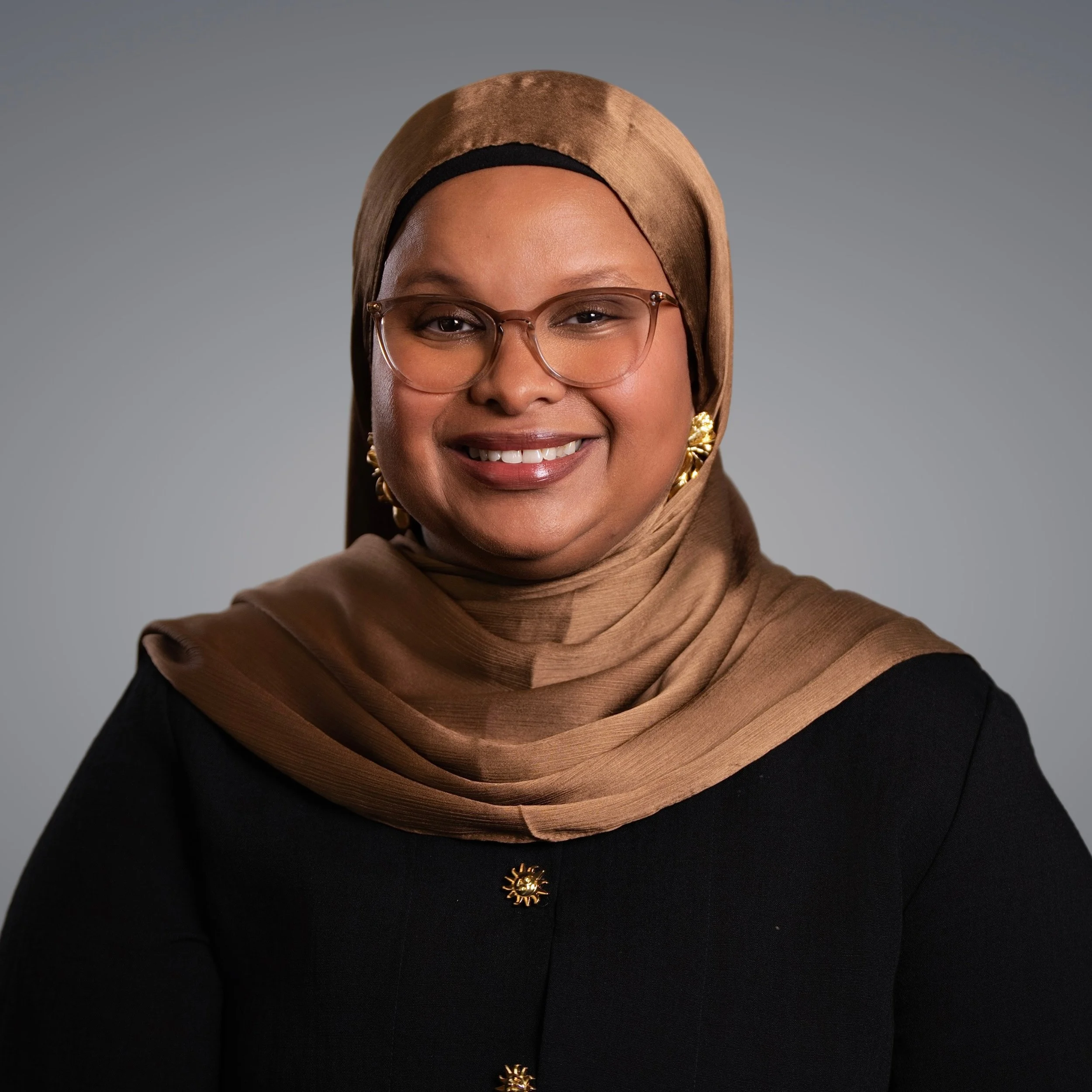
Malika Dahir is the Executive Director of Reviving Sisterhood, a Minnesota-based nonprofit amplifying the voice and power of Muslim women through storytelling, leadership development, civic engagement, and advocacy. A Somali American community leader and mother, she advances gender justice, economic empowerment, and collective action while challenging Islamophobia, anti-Blackness, and systemic barriers. During Operation Metro Surge, she led community response efforts supporting immigrant families and small businesses. Her leadership centers community care and building power so Muslim women can shape the decisions that affect their lives.