From Surviving to Thriving: A Personal and Professional Journey.
As divorce continues to rise in the American Muslim community, I often reflect on my own journey as a Muslim woman and how my personal experiences shaped the direction of my professional life. While conversations around divorce are becoming more common, there is still significant stigma attached to women who leave abusive or unhealthy situations.
Many survivors struggle in silence, fearing judgment, isolation, or the loss of community support. I know this reality intimately because I once stood in that position myself.
About ten years ago, with two young children, I saw no clear way forward and made the difficult decision to flee to a domestic violence shelter. This situation was something that I had only seen in movies or heard about in passing from other women. To suddenly find myself in that position felt like an out-of-body experience. I remember feeling overwhelmed, scared, and uncertain about what my future would look like. Leaving was not a single moment of courage but rather a series of painful decisions made while trying to protect both myself and my children.
At that point in my life, I had very little confidence in myself. Years of emotional pain and instability had shaped the way I viewed my worth and my abilities. I had to go into hiding and keep my circle very small while navigating one of the most pivotal moments of my life. The isolation was incredibly difficult, but it also forced me to rebuild my life from the ground up. As time passed and I slowly regained a sense of structure and safety, I began leaning into community and organizational support.
When I reflect back on key moments that led me to where I am, I see God placing me in positions and meeting with people that would become my new community. Ironically, at this time, I worked at a Muslim social services agency, and my boss was the leading domestic violence advocate in the Muslim community. Through my work there I began to hear terms and get information about domestic violence, but I was unable to see that I was also going through the same things that I was advocating for. It feels bizarre saying it, but I was socially conditioned and never saw myself as a victim but instead as a wife who was “not good enough” with a husband who had “anger issues.” It was not until violence escalated more than what I had deemed acceptable that I decided that I needed to do something.
When I had decided that I would summon the courage to leave, I called my boss before work and said to her, “I have to meet with you about something important,” knowing that if I told her in advance, I would be less likely to back out of the conversation when the time came. When I got to work, for the first time ever, I shared my secret about being abused by my then-husband. She asked if I had any bruises, and I lifted my shirt and showed her a bruise that was blue and black. She tenderly looked at it and then took a few pictures. I was scared and relieved at the same time. That moment was the start of a new chapter in my life.
A series of events took place, and with a suitcase and my van I ended up in a remote part of town with my two boys in tow. As I met with the staff, they gave me a towel and new bedding. I was about to spend two months in a shelter with other survivors and their children. I felt like I was transported to a different planet. Each day felt tumultuous, and my emotions and bewilderment about what I had done mounted. Seeing my distress, the shelter staff connected me with a therapist.
This was my first-ever encounter with a therapist, and the trajectory of my life changed forever. For the first time in my life I was learning about concepts that I never knew. The time apart from my ex-husband and the safety allowed for me to unpack and comprehend the years of abuse that I had internalized. The therapist was able to read the messages that my ex sent and point out spiritual abuse, manipulation, threats, and intimidation. I felt like I was learning a new language. Like the therapist was giving me a primer to understand the context of my life as I knew it.
After transitioning out of the shelter and getting back to my own home, someone told me about Ikram Foundation. I needed a job and an education and so I called them. Ikram Foundation was founded to help women who are divorced or widowed become financially self-sufficient to support themselves and their families. The founders of Ikram Foundation understood that this demographic of women were likely to fall into cycles of poverty, and they wanted to invest in women's education to give them the dignity and respect to be empowered leaders in their families and communities.
I still remember meeting with the former Executive Director of Ikram Foundation during one of the lowest points in my journey. She asked me what I wanted to do with my future, and I sheepishly admitted that I wanted to become a therapist. To my surprise, she did not hesitate. She believed in me even when I could not believe in myself. That moment stayed with me because it reminded me how transformative it can be when someone sees your potential before you are able to see it yourself.
I started what is typically a 2-year master’s program in 2017, but because of my commitments as a working mother, I completed the program in 4 years. I was both energized and exhausted. I reached out to friends and colleagues to support childcare while I did evening classes. I was learning about trauma, recovering from my own divorce, and raising two young boys while trying to keep everything afloat. There were times when I would bring my boys to college and give them an iPad while they sat outside of my classes.
On the weekends I would take the kids to the gameroom of the campus and try to write papers. I sometimes would look at my classmates, mostly young adults in their early 20’s, and think about the vastly different lives that we were living. All these were fleeting thoughts because the drive was to get through, heal, become a therapist that can relate to the unique cultural struggles that I had experienced, and to prove to myself and my boys that the struggle and hardship was worth it.
The reason I am standing where I am today is because women-led organizations within the community were providing services and support to Muslim survivors. These organizations created spaces where women could seek help without shame and begin rebuilding their lives with dignity. later had the privilege of beginning my career at the very organization that once supported me as a client, which has been one of the most meaningful full-circle moments of my life.
Today, as the Program Director of Ikram Foundation and a mental health therapist, I carry that same belief that with the right support Women who feel incapable of achieving their goals can achieve anything. As a woman and a survivor, I understand how abusive relationships and family dynamics can distort a person’s sense of self-worth. Many survivors begin to internalize the harmful messages they hear about themselves and lose confidence in their ability to rebuild their lives. Sometimes, having just one person believe in you can create a positive and lasting impact.
Through my own journey, I witnessed how circumstances can change, how mental health can improve, and how hope for the future can return. Those experiences, along with many others, gave me the blueprint for continuing to work with a population I deeply care for and personally relate to. My story is not only one of survival but also one of community, healing, and the power of women supporting other women through some of life’s most difficult moments. As a therapist It is my greatest privilege to sit with women who are experiencing some of the hardest and lowest times in their life and hold the hope of a better future for them.
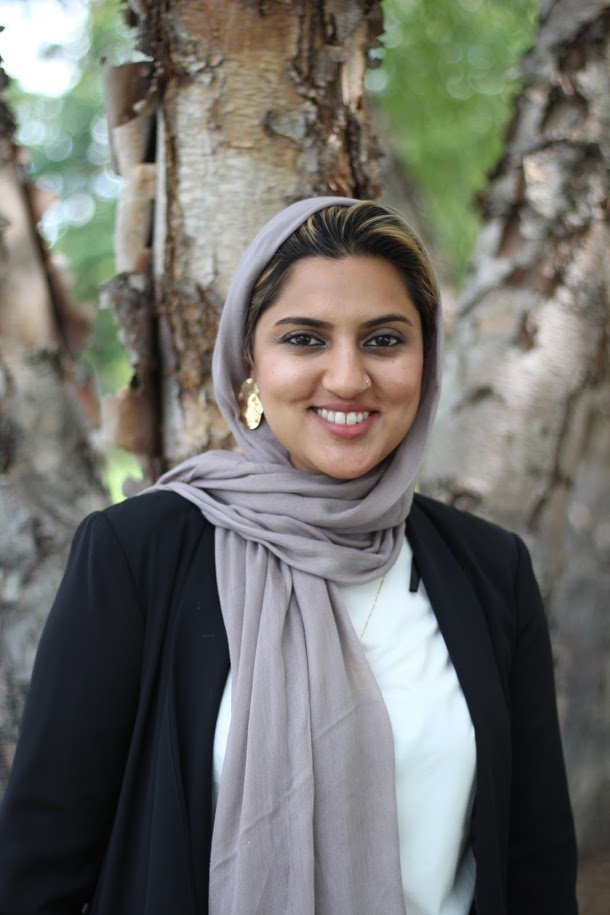
Saman Quraeshi is the Program Director of Ikram Foundation and a clinical therapist who has over 15 years of experience in the nonprofit sector. She has worked with domestic violence survivors in various capacities. Saman believes in grassroots work and empowering survivors with all resources available to help them and their children succeed.