Beyond the Single Story
“I am searching for myself.”
You’ve heard this phrase before, I’m sure. From movies, songs, and self-help books to school counselors, annoyingly rich travel bloggers, and eager motivational speakers, most of us have heard some variation of it throughout our lives.
But what does it even mean?
A dear friend of mine would tell you it is nothing more than a load of baloney! And although I am inclined to agree with her because of her vast knowledge in many things unknown to me, I still find myself pausing whenever the phrase finds its way back to me.
Of course, it isn't literal. No one is going into the woods with a flashlight to find “themselves.” And I can tell you from years of watching crime shows that nothing good usually comes from going into the woods with a flashlight.
So what are we searching for?
Well, like a true academic, I cannot simply give you an answer. I must first take you on a journey.
It begins with a poem I recently unearthed, written by a teenage me.
Who am I?
Can you tell me?
I am the lost wind that blows when it feels the need.
I am the ocean uncharted by man,
Where none dare to invade,
Without wishing that he could be freed.
I have no claim to land.
No claim to a flag,
Or even roots on which to stand.
I have no idea what was happening in my life the day I wrote this, but I do know that this is how I felt for much of it. Unanchored. Lost. Searching.
But reading it now, one line stands out:
Can you tell me?
Because, for much of my life, other people did tell me who I am.
My mother told me I was the child she birthed at fifteen in Mogadishu, Somalia, in a small, rickety hospital, serenaded by the sounds of dropping bombs as she pushed me into the world.
A month later, humanitarian workers at the refugee camp my teenage mother fled to knew me as another Somali refugee they were responsible for feeding and clothing.
Two years later, across the globe in America, society told me I was Black, poor, and an immigrant.
And the stories kept coming.
I became a mother and then, at twenty-one, a single mother. I raised my son while figuring out adulthood myself. I worked, went to school, and built a career. Then COVID changed my health and the way I moved through the world. I became chronically ill while still mothering, working, studying, and trying to understand what was happening to my body. Somewhere in the middle of it all, I earned my doctorate.
Refugee. Immigrant. Black. Single mother. Educator. Chronically ill. Doctor. Writer.
Some of these identities were given to me. Some I chose. Some I earned.
And somewhere along the way, I began wondering which stories were actually mine.
Then, on Saturday, November 22, 2025, I walked into Soomaal House of Arts to facilitate my first event titled Qalin Iyo Qiso, or “Pen & Story,” centered on the theme “The Power of Storytelling.” This gathering invited community members to reflect, write, and share personal narratives that speak to identity, memory, and belonging through guided writing prompts and open dialogue. I didn't know it then, but that night would change something in me.
For a few hours, we slowed down. We talked about storytelling as a birthright, deeply rooted in Somali culture and in how human beings have always remembered, connected, preserved, and made meaning.
We wrote. We remembered. We reflected. We laughed. We listened.
I watched what happened when people were permitted to pause long enough to turn inward and tell their stories in their own words. I had walked into Soomaal House believing I was there to facilitate reflection for everyone else. I left the experience changed by it myself.
After witnessing so many varying Somali stories, I went home that night thinking of something novelist Chimamanda Ngozi Adichie said in her TED Talk “The Danger of a Single Story”:
“The single story creates stereotypes, and the problem with stereotypes is not that they are untrue, but that they are incomplete.”
Incomplete. There it was.
I was a refugee. I was poor. I am Black. I am an immigrant. I am a single mother. I am chronically ill.
All true. And alone, all incomplete.
The danger comes when one truth about us is repeated so often that it begins to swallow the others. A circumstance becomes an identity. An identity becomes a narrative. And eventually, someone else's narrative can become the story we tell ourselves.
Maybe that was what teenage me was trying to understand when she asked: Who am I? Can you tell me?
There were already so many answers.
What I didn't yet understand was that I was allowed to answer the question myself.
The next day, November 23rd, I was still thinking about Soomaal House and what I had witnessed when people were given space to pause, reflect, connect, and tell their stories for themselves.
Somewhere in that reflection, The Story Doc, a storytelling and reflective practice centered on connection, belonging, and community, was born.
I wanted everyone to experience what I felt while facilitating Qalin Iyo Qiso. The Story Doc aims to create spaces for intentional pause, storytelling, reflection, meaning-making, and connection. Spaces where we can examine the stories we inherited, the narratives placed upon us, and the stories we eventually learned to tell ourselves. And ask: Is this the whole story?
That, to me, is radical self-understanding.
Taking control of our narratives doesn't mean changing what happened.
It means refusing to let one chapter become the entire book. It means understanding what has shaped us while remembering that we still have a voice in what it comes to mean.
There is healing in knowing ourselves deeply enough to recognize the stories that no longer belong to us.
There is freedom in telling a fuller story.
If I could be part of dismantling anything, it would be our unquestioned acceptance of the narratives placed upon us. And if I could build something in their place, it would be a culture of radical self-understanding, one where we pause, reflect, question, reclaim, rewrite, and take greater ownership of the stories we choose to carry forward.
Maybe that is what I was searching for all along.
Not myself. The freedom to know myself beyond the stories I had been given.
And maybe that is what I would tell the teenage girl who once asked:
Who am I?
Can you tell me?
No.
But I can hand you the pen.
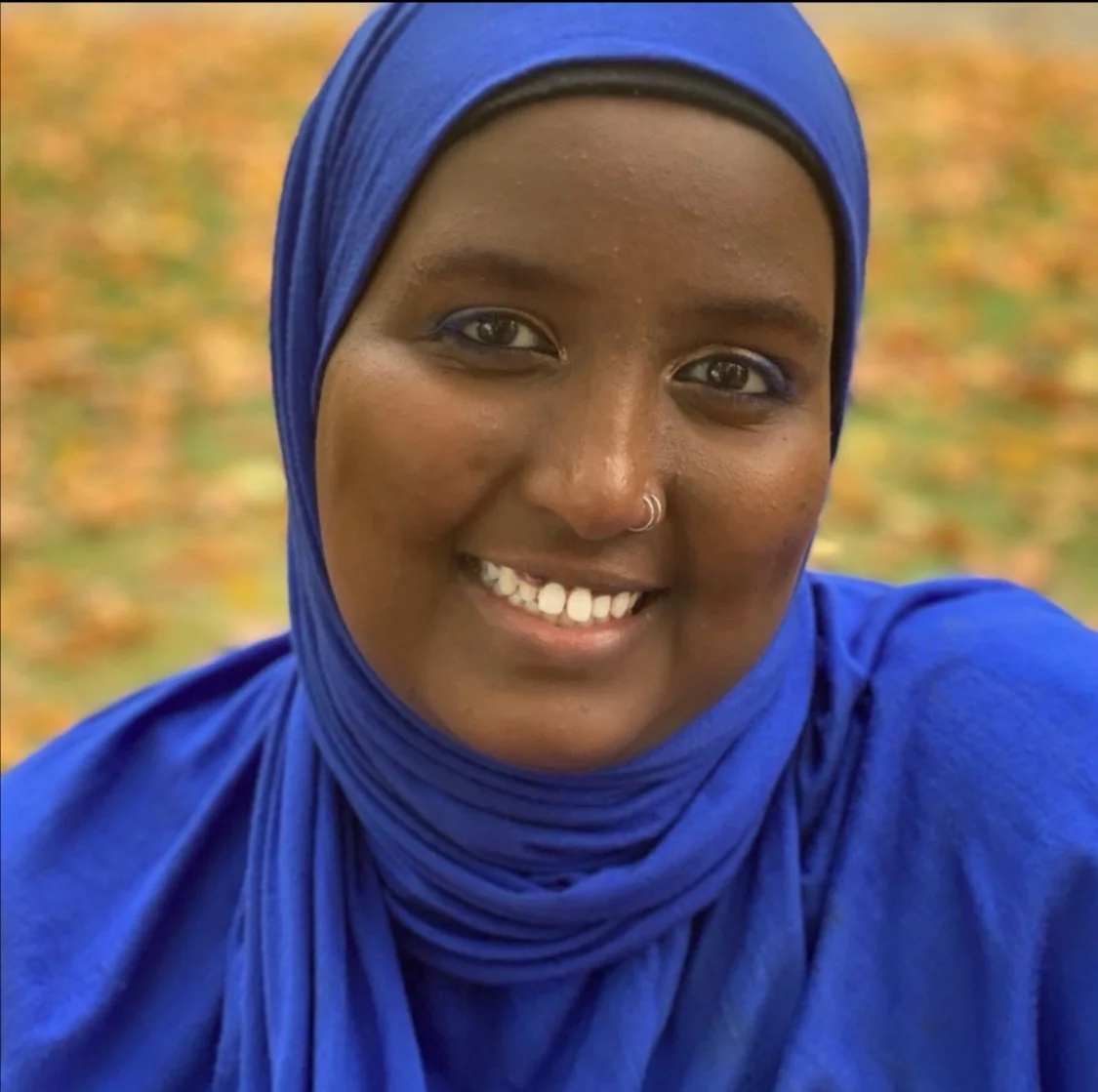
Dr. Basima Mohamed is an educator, facilitator, and founder of The Story Doc, a storytelling and reflective practice centered on connection, belonging, and community. With over 15 years of experience in education and a background in family science, she holds a doctorate in neuroeducation. Her work spans schools, nonprofits, and community organizations, where she creates culturally grounded spaces for storytelling, reflection, and meaningful dialogue. Through community partnerships and ongoing reflective programming, Dr. Mohamed helps individuals, families, and communities slow down, connect, and make meaning of their experiences. You can learn more about The Story Doc on her website https://www.thestorydoc.com/ . Dr. Mohamed is also building community through Hooyo’s Home, a monthly gathering for mothers centered on connection, reflection, and belonging. Announcements and upcoming gatherings can be found on her Instagram, @TheStoryDoc.