She Fought and Died for Our Belonging
I was over at my sister’s place, the kind of visit where conversation drifts easily—from TikTok influencers to family affairs, from laughter to quiet pauses. But threaded through every topic was something heavier, almost pulsating beneath the surface: fear, uncertainty, and a shared sense of disbelief. How did we get here? Yes, that couple on TikTok got divorced—but when will we feel safe again? Yes, our uncle back home in Africa is sick and needs financial help—but how do we comfort our children when they ask about the masked men kidnapping people off the street? How do we explain what we ourselves cannot comprehend?
My sister and I have lived in the U.S. for over thirty years, yet we have never felt the ground beneath our feet shift the way it is now.
Each day it feels harder to find joy—even the smallest pieces of it—to keep us going as we scroll through the news morning, afternoon, and late into the night, long after our children have fallen asleep.
Before I left her apartment, my sister shared something deeply personal and powerful, so much so that I asked if I could later share it with my leadership circle. She told me that, for the first time in her life, she is considering home ownership. She was never sold on the idea of the big, beautiful house with the white fence—the so-called “American dream.” I felt the same. Our hesitation was rooted in fear: fear of losing the closeness of apartment life, the wall-to-wall neighbors, the built-in sense of community. The safety bubble. The familiar noise upstairs, the scurrying of feet downstairs. The comfort of never sitting alone in the silence of a large home.
I was surprised by her confession and asked her to tell me more.
She said what finally pushed her to consider it was the bravery of Renee Nicole Good—the Minneapolis mother, poet, and community advocate who was brutally killed by federal agents.
Quietly, my sister said she never felt like she truly belonged. She was naming something so many bicultural, bilingual 1.5- and second-generation immigrants carry: the ache of living in between, of being neither here nor there.
Then she said, simply, “She died for our belonging.”
I nodded and added, “She could have been doing anything else that day. She could have just gone home.”
Instead, Renee—alongside her wife—stood with other observers and protestors. Surrounded, boxed in, her final words were, “That's fine, dude. I'm not mad at you,” offering even the agents who trapped her a wish for peace. Her courage, her insistence on truth, her commitment to her immigrant white, Brown, and Black neighbors shook something awake in my sister, in me, and in millions around the world.
In the Qur’an, there is a verse that captures the weight of this kind of loss: “whoever kills a soul – it is as if he had slain mankind entirely. And whoever saves one – it is as if he had saved mankind entirely.” (5:32)
Renee’s life—and her death—forces us to confront what belonging truly costs and who is deemed worthy of it.
If Renee’s courage can move my sister to imagine roots where she once felt only limbo, then the work now is clear. We owe it to her and to our children to turn grief into grounding, fear into presence, and loss into a fierce refusal to disappear.
Belonging, after all, is not granted—it is claimed.
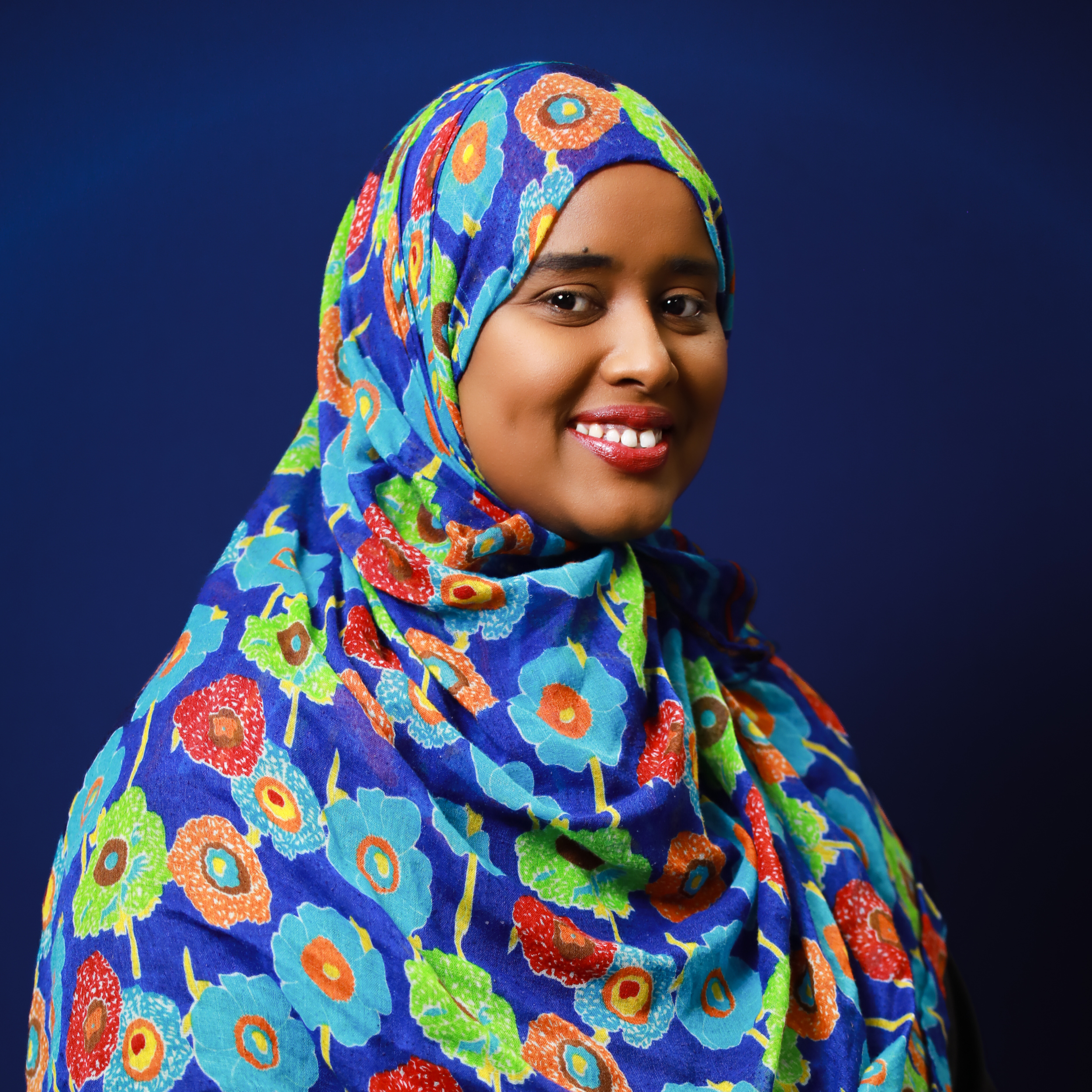
Anisa Hagi-Mohamed is a Somali-American creative entrepreneur, writer, and advocate whose work centers language, healing, cultural identity, and neurodiversity, informed by her lived experience as a mother of three autistic children. Through her leadership with Maangaar Voices and other community initiatives, she advances culturally grounded autism advocacy, systems change, and belonging locally and globally.